Pilot light is on but no hot water: why the burner isn't doing its job
Why It Stopped editorial team, updated
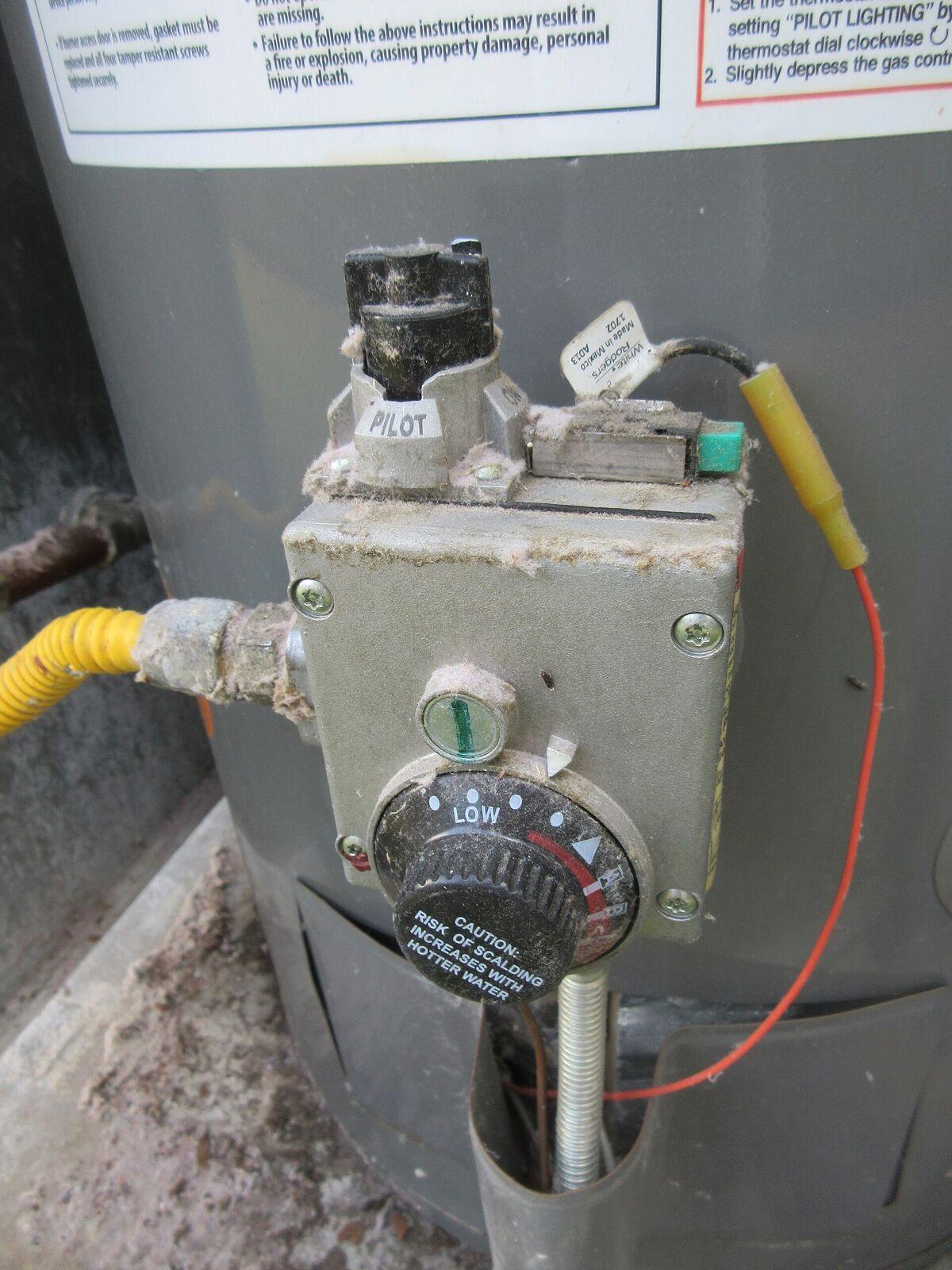
When the pilot is lit but the water stays cold, the pilot isn't the problem: the main burner either isn't coming on or isn't keeping up. A manufacturer's service chart for this exact symptom lists a temperature dial set too low, a thermostat that thinks the tank is already hot, low gas pressure and a faulty gas control. If the burner does fire but the water is only lukewarm, look at demand, cold incoming water, sediment and a broken dip tube.
First, watch the main burner
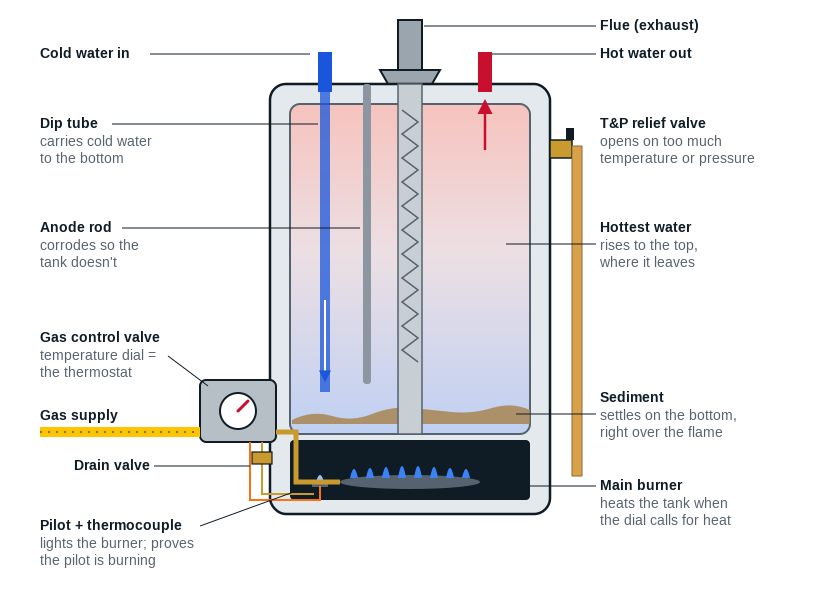
The pilot is a small flame. The main burner is the big ring of flame under the tank that actually heats the water. When the water cools, the thermostat inside the gas control opens the valve, gas flows to the burner, and the pilot lights it, as Lennox describes the cycle. So the first question is simply: does the burner come on?
- Make sure nobody has used hot water for the last hour, or run a hot tap for a few minutes to empty some of the tank.
- Turn the temperature dial on the gas control up a notch or two.
- Look through the viewing window at the bottom of the heater. Within a minute or so you should see the burner light with a "whump" and a wide blue flame.
- Turn the dial back to where it was once you've seen what happens.
What you see sends you down one of three paths:
| What you see | Go to |
|---|---|
| Pilot burning, main burner never lights | Burner won't come on |
| Burner lights, water still lukewarm or runs out fast | Burner runs but can't keep up |
| Burner lights, then goes out after a short time, sometimes with the pilot | Burner lights, then shuts off |
If the pilot isn't actually lit, you're in the wrong place: see pilot light won't light or pilot light keeps going out.
The burner won't come on
Bradford White's service manual has a troubleshooting row for exactly this symptom, "pilot will light but the main burner will not come on". Its causes, in the order a technician checks them:
1. The dial is set too low, or on Vacation
The temperature dial is the thermostat. If it's on Vacation, Pilot or the lowest mark, the burner has no reason to fire. This happens after someone relights the pilot and forgets to turn the dial back to ON and a normal setting, or after a trip. Lennox notes that below about 90°F a water heater is essentially doing nothing useful.
Fix: set the dial to your normal temperature. Many households use about 120°F; Lennox cites the Department of Energy recommending 120°F for most homes.
2. The tank thinks it's already hot
The chart's second cause is a thermostat that is "satisfied". If the water at the thermostat's sensor is already at the set temperature, the burner stays off, even if the water at your tap feels cool. That points to the next section (mixing from a broken dip tube, or a setting lower than you think) rather than a burner fault.
3. Not enough gas, or low gas pressure
If other gas appliances are weak or off too, the problem is the supply. Check that the shutoff valve on the heater's gas pipe is open (handle parallel to the pipe). If several appliances are affected, call your gas utility. Measuring line pressure at the heater is technician work; the manual lists it as a service procedure.
4. A failing gas control
The gas control valve combines the thermostat and the gas valve in one unit. Bradford White lists a control that is out of calibration, or has too wide a temperature swing, as a cause, with replacement if it fails a check. It's not a DIY part on a gas appliance.
5. A dirty burner or orifice
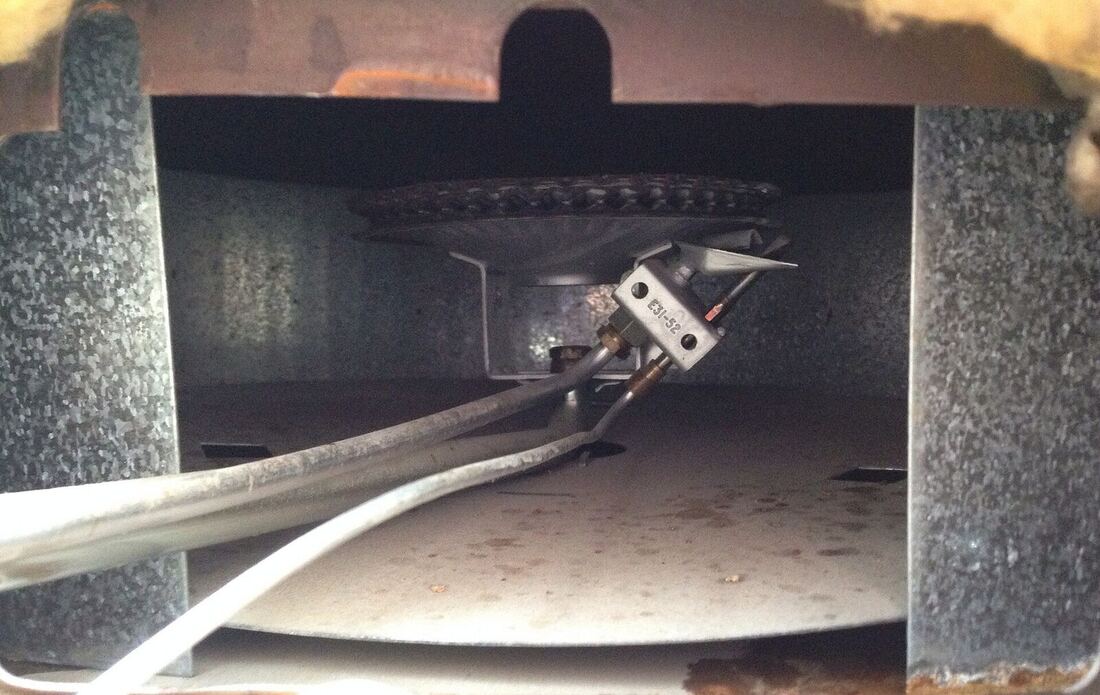
Lennox lists dust, rust and mineral residue near the burner, and repeated clicking without the burner lighting, among the signs of a burner problem. Bradford White's manual calls for a visual check of the main burner at least every six months and describes cleaning the burner and its orifice when it won't burn properly. On flammable-vapor (FVIR) heaters that means removing the burner assembly from behind the sealed inner door, which is a job for a plumber or water heater technician.
The burner runs, but the water is lukewarm
Here the burner works, but you're getting less hot water than you used to. Bradford White's "not enough hot water" row lists these causes:
Demand bigger than the tank
Lennox estimates a 10-minute shower at roughly 20 to 30 gallons, a dishwasher cycle at 4 to 6 and a load of laundry at 15 to 25. Two showers and a laundry load back to back can empty a 40- or 50-gallon tank. Then you wait: Lennox puts a 40-gallon gas heater at roughly 30 to 40 minutes to heat a full tank and a 50-gallon at 40 to 50 minutes.
If running out has always been the norm in your house, the heater may simply be undersized for your household, which the manual also lists as a cause.
Very cold incoming water
In winter, the water coming into the tank is much colder, so the same tank delivers fewer hot gallons. Lennox points out incoming water can be 70 to 80°F in summer and far colder in winter. If the problem started with cold weather and nothing else changed, this may be all it is.
A broken dip tube
The dip tube is a long plastic tube that carries incoming cold water down to the bottom of the tank, so it doesn't mix with the hot water at the top where the outlet is. Lennox lists the signs of a cracked or deteriorated one: lukewarm showers, hot water that runs out faster than it should, and small plastic fragments in faucet aerators or showerheads. Bradford White's chart includes an out-of-spec dip tube "diluting hot water with cold water". Replacing it is far cheaper than a new heater, but it means draining down and opening a fitting on top of the tank.
Sediment
Minerals settle at the bottom of the tank, right on top of the burner's heat. Lennox describes sediment as forcing the heater to work harder and lists rumbling or popping during heating as the sign. Flushing the tank once a year, or twice in hard water areas, is Lennox's advice. Heavy, years-old sediment is also a sign of an aging heater.
The dial or gas control again
A dial set low, or a gas control that's out of calibration, can also give you lukewarm water rather than none. If turning the dial up makes no difference to the temperature at the tap after a full recovery time, have the control checked.
The burner lights, then shuts off
If the burner lights and then cuts out early, or the pilot goes out with it, the heater is usually short of air or venting badly. Bradford White's chart points to blocked combustion air openings (including a lint-clogged flame arrestor), a clogged or wrong vent, and inconsistent gas pressure. On flammable-vapor heaters, a starved burner can also trip a thermal switch. Our pilot light keeps going out guide walks through those checks. Lennox adds that yellow or orange flames, soot and repeated safety shutdowns all deserve a professional look.
Quick checks you can do safely
- Confirm the dial is on ON (not Pilot or Vacation) and at your normal temperature.
- Run hot water to empty part of the tank, then watch through the window for the main burner.
- Check other gas appliances and the heater's gas shutoff valve.
- Clear storage and lint away from the base of the heater so it can breathe.
- Unscrew a faucet aerator and look for white plastic bits (dip tube).
- Wait a full recovery time (30 to 50 minutes for most gas tanks) after heavy use before judging.
When to call a pro
Age matters too. If your tank is around 10 years old or more and now struggles, read how long water heaters last before paying for a big repair. If you have a tankless unit instead of a tank, its usual cause of falling performance is scale: see tankless water heater maintenance. All topics: water heater troubleshooting.
Questions people ask
Why is my pilot light on but the water heater isn't heating?
Because the pilot only lights the main burner; it doesn't heat the tank by itself. If the burner never comes on, the usual reasons are a temperature dial turned down or on vacation, low gas pressure, a gas control that's failing, or a dirty burner or orifice. Turn the dial up and watch through the window to see whether the burner lights.
How long does it take a gas water heater to make hot water again?
Lennox puts a 40-gallon gas heater at roughly 30 to 40 minutes to heat a full tank, and a 50-gallon at 40 to 50 minutes. Electric tanks take about twice as long. If you've just relit the pilot or used a lot of hot water, give it that long before deciding something's wrong.
What does the vacation setting on a water heater do?
It keeps the pilot burning but holds the tank at a very low temperature so the burner rarely runs. It's great when you're away and confusing when someone forgets to turn it back. Move the dial back to your normal setting.
Can a bad dip tube cause no hot water?
It causes lukewarm water and hot water that runs out quickly rather than none at all. The dip tube carries incoming cold water to the bottom of the tank; when it cracks, cold water mixes with the hot water at the top. Lennox says plastic bits in faucet aerators are another sign.
Is it the thermocouple if the pilot stays lit?
Usually not. A failing thermocouple lets the pilot go out. If your pilot burns steadily but the burner won't fire, the gas control's thermostat side, gas pressure or the burner itself is more likely.
Sources
- Bradford White: Service manual, troubleshooting chart for gas water heaters (PDF)
- Lennox: Water heater burner, how it works and common problems
- Lennox: Dip tube in a water heater
- Lennox: How long does a water heater take to heat up?
- Lennox: Hot water heater not working
- Lennox: How long can a water heater last?
Written by the Why It Stopped editorial team from the manufacturer manuals and safety guidance listed above. It covers checks a homeowner can do safely; gas lines, refrigerant and sealed components are work for a licensed technician. See our editorial policy and safety disclaimer.
Other water heater problems
How long do water heaters last, and how to tell yours is near the end
Lifespan by type, how to read your heater's age, warning signs, and the repair-or-replace rule of thumb.
Why your water heater pilot light keeps going out
Lights, then dies: timing points to the thermocouple, drafts, a dirty pilot or the gas supply.
Water heater pilot light won't light: what's stopping it
No flame at all when you try to light it: gas supply, igniter, clogged pilot or a tripped safety device.
Tankless water heater maintenance: what it needs and how often
Descaling once a year (more in hard water), inlet and air filters, vent checks, and what to leave to a pro.