Heat pump not turning on: indoor checks, outdoor checks, and when it's normal
Why It Stopped editorial team, updated
A heat pump that won't turn on is usually being stopped by its thermostat, its power supply or one of its own safety controls. Start with the thermostat (mode, setpoint, batteries and whether it's even heat-pump compatible), then breakers, the filter and the outdoor unit. One case isn't a fault at all: on Emergency heat, the outdoor unit is supposed to stay off.
What "not turning on" looks like
| What you see | Most likely | Start with |
|---|---|---|
| Thermostat blank, nothing runs | Thermostat or indoor power | Checks 1 and 2 |
| Thermostat fine, nothing runs indoors or out | Power, breaker, safety shutdown | Checks 3 to 5 |
| Indoor fan runs, outdoor unit silent, house still warm | Emergency heat on, or a defrost | Check 2 |
| Indoor fan runs, outdoor unit silent, house getting cold | Outdoor power, capacitor, ice | Checks 3, 6 and 7 |
| Outdoor unit clicks or hums but won't start | Capacitor or compressor | Check 7 |
If the heat pump does run but only blows cool air, you want heat pump blowing cold air instead.
1. Thermostat settings and power
Trane calls incorrect thermostat settings one of the most common reasons a heating and cooling system won't turn on. Check:
- Mode: Heat in winter, Cool in summer. On Auto, check both setpoints.
- Setpoint: above room temperature for heating, below it for cooling, as Lennox puts it.
- Batteries: Lennox notes a thermostat with dead batteries can't tell the system to start.
- A blank screen: Trane says it means the thermostat has no power and can't signal the heat pump. Batteries first; on a hardwired thermostat, power comes from a transformer in the indoor unit, so a blank screen points to the indoor unit or its wiring (Lennox explains the common-wire setup).
Did you just change the thermostat?
Trane points out two catches with a new thermostat: it may have been wired wrong, or it may not be compatible with heat pumps at all, since not every model is. A heat pump thermostat has to control the reversing valve and the backup heat separately. If the trouble started right after a thermostat swap, that's your prime suspect. Check the installation guide's heat pump settings, or have it checked.
2. Emergency heat, aux heat and defrost
Three normal situations make a healthy heat pump look broken:
- Emergency heat (EM HEAT). Lennox explains that emergency heat completely shuts off the heat pump and runs only the backup heat source. If someone switched to it, the outdoor unit will sit silent while the house is heated, expensively, by backup strips or a furnace. Switch back to normal Heat.
- Defrost. In cold, damp weather the outdoor unit periodically defrosts its coil. Trane notes the outdoor fan may stop during defrost, and the unit can steam and whoosh. That lasts minutes, not hours. Details are in our heat pump blowing cold air guide.
- Aux heat showing on the thermostat means the backup is helping the heat pump in cold weather, not replacing it. The outdoor unit should still be running.
3. Breakers and the outdoor disconnect
A heat pump system usually has a breaker for the indoor unit and one for the outdoor unit, plus a disconnect box on the wall next to the outdoor unit. Look for breakers labeled "HVAC" or "heat pump" that are in the middle or off position, and make sure the disconnect is on.
Lennox describes resetting a tripped breaker by flipping it off and back on. Trane is more cautious: it says to call for service if the heat pump breaker is tripped, because a fault in the unit may have tripped it. Reset it once at most. If it trips again, leave it off.
4. The indoor unit and its switch
The indoor half (an air handler, or a furnace on a dual-fuel system) needs power too. Look for a light-switch-style switch on or near it and make sure the front panel is seated: a loose panel can open a door safety switch. Lennox also lists a blown fuse among the reasons a heat pump loses power, often after a surge.
5. A clogged filter
Trane says a dirty filter or a blockage at the outdoor unit can make a heat pump overheat and shut down, and Lennox adds that restricted airflow can trigger safety switches or make the system freeze up. Replace the filter if it's dirty or more than 1 to 3 months old, and make sure furniture or curtains aren't blocking return grilles.
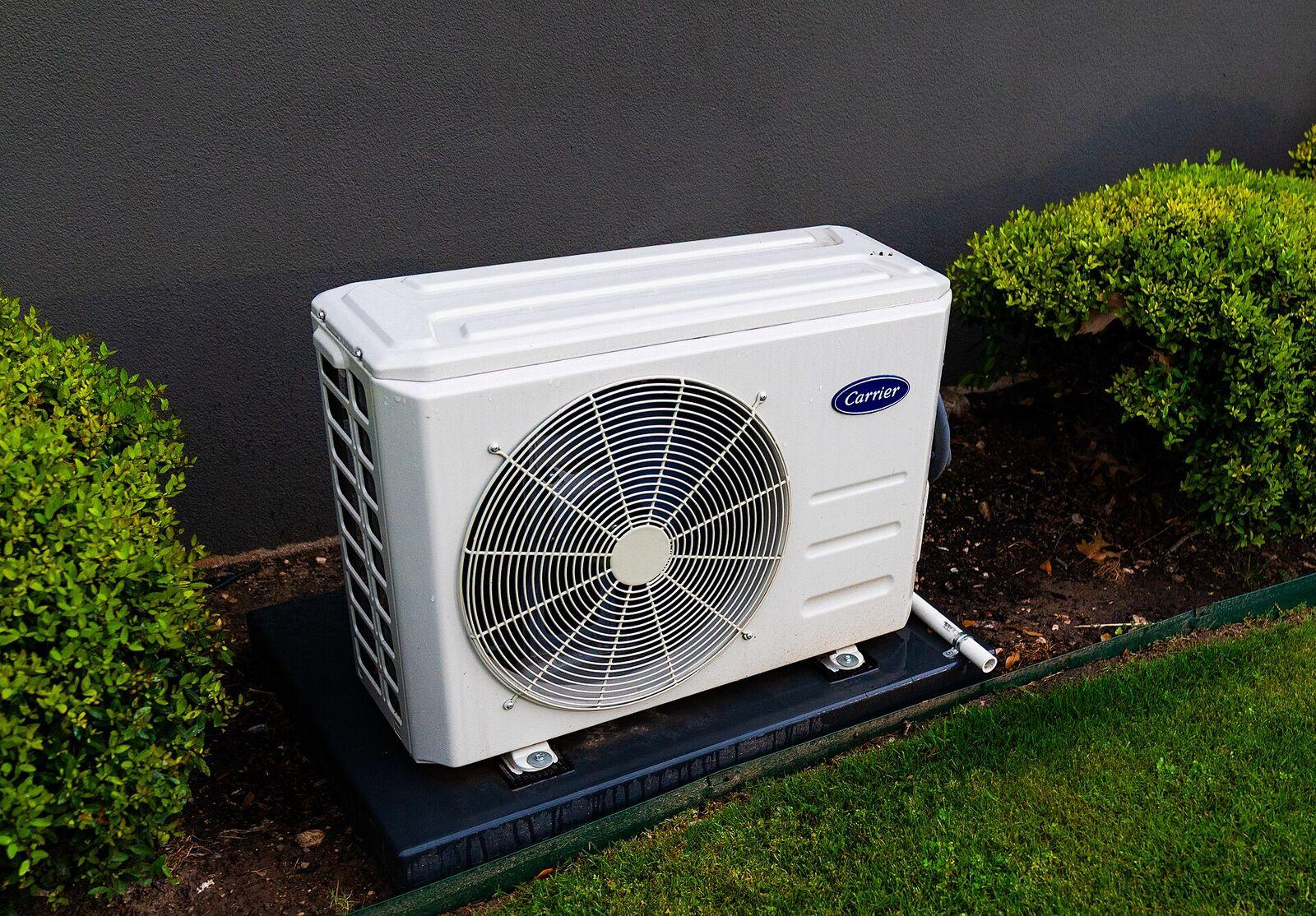
6. Snow, ice and debris at the outdoor unit
Lennox lists leaves, ice and snow around the outdoor unit as a reason it won't run properly, especially in winter. Gently clear snow and debris away from the coil and the top fan grille. If the coil is encased in ice, turn the system off at the thermostat (use Emergency heat if you need heat) and let it thaw naturally. Lennox warns never to chip at the ice or pour hot water on it; if it hasn't melted in 6 to 8 hours or refreezes quickly, call a technician.
7. Capacitor or compressor (technician)
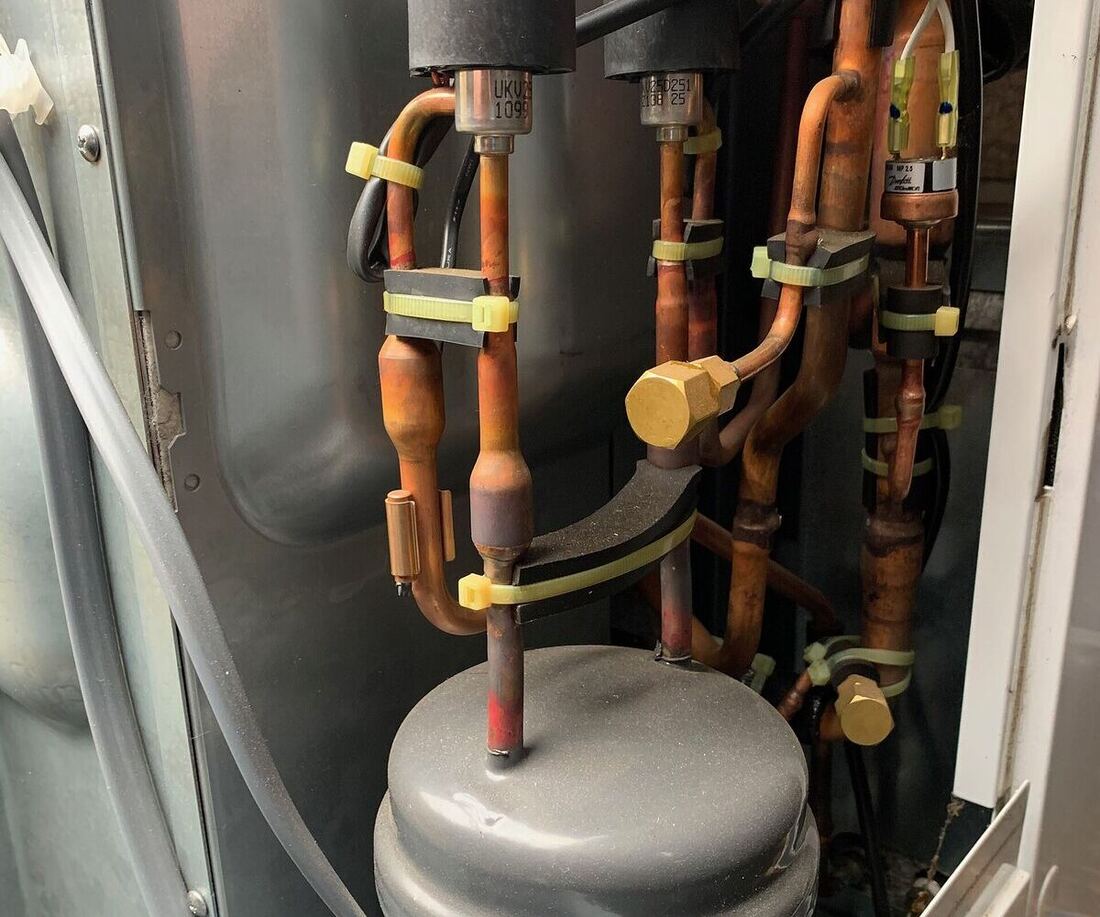
If you hear the outdoor unit click or hum but it doesn't start, Trane points to the capacitor, which gives the compressor and fan motors their starting jolt. Some units have separate start and run capacitors; others combine them. A failed capacitor is a common, fixable repair, but it holds a charge, so it's technician work.
If a technician has ruled everything else out, the compressor itself may have failed. That's the most expensive outcome, and on an older system it's the point to weigh repair against replacement.
When to call a pro
In the meantime, emergency heat will keep you warm if your system has it. Afterwards, a yearly service visit catches weak capacitors and dirty coils before they leave you without heat: see heat pump maintenance. If your system starts but won't shut off, read heat pump keeps running. For a central AC that won't start, see AC not turning on. All topics: heat pump troubleshooting.
Questions people ask
Why is my heat pump not turning on outside, but the inside fan runs?
Check whether the thermostat is on Emergency heat. That setting shuts off the heat pump and heats only with the backup, so the outdoor unit stays off on purpose. If it's on normal Heat, the outdoor unit may be in a short defrost, may have lost power at its breaker or disconnect, or may have a failed capacitor.
How do I reset my heat pump?
Turn the system off at the thermostat, then switch off the heat pump's breaker or outdoor disconnect, wait a few minutes, turn the power back on, then the thermostat. Lennox describes resetting a tripped breaker this way. If the breaker trips again, stop and call a technician: Trane notes the trip may be caused by a fault in the unit.
My heat pump clicks but won't start. What is that?
Trane says a heat pump that clicks but fails to start may have a failed capacitor, the part that gives the compressor and fan motors their starting jolt. Turn the system off and call a technician; capacitors hold a charge and shouldn't be handled by homeowners.
Can I use any smart thermostat with a heat pump?
No. Trane points out that not all thermostats are compatible with heat pumps, and that a newly installed thermostat that's wired wrong or isn't heat-pump ready is a common reason a system won't turn on. Check the thermostat's compatibility and its heat pump settings.
Should I use emergency heat if my heat pump won't turn on?
If the heat pump has failed or is frozen and you need heat while you wait for a technician, yes. Lennox describes emergency heat as the backup for a frozen or malfunctioning heat pump. Just remember it's usually electric resistance heat, so it costs more to run.
Sources
- Lennox: Heat pump not turning on
- Trane: Heat pump not turning on
- Lennox: What is emergency heat?
- Lennox: Heat pump frozen
- Trane: What is a heat pump defrost cycle?
- Lennox: No power to thermostat
Written by the Why It Stopped editorial team from the manufacturer manuals and safety guidance listed above. It covers checks a homeowner can do safely; gas lines, refrigerant and sealed components are work for a licensed technician. See our editorial policy and safety disclaimer.
Other heat pump problems
Heat pump blowing cold air: normal, defrost, or a real problem?
Normal heat pump air, a defrost cycle, or a fault: how to tell and what to check.
Heat pump keeps running nonstop: normal in the cold, a problem in mild weather
Long runs in the cold are normal. In mild weather: fan setting, thermostat, filter, outdoor coil, aux heat, stuck contactor.
Heat pump maintenance: what you do, what the technician does, and when
Filters every 1–3 months, 2 feet of clearance outside, winter snow and ice care, and a tune-up each spring and fall.