Furnace not turning on: 9 checks, in the order a tech would do them
Why It Stopped editorial team, updated
When a gas furnace won't turn on, start with the things that cost nothing: the thermostat setting and batteries, the furnace power switch, the breaker and the filter. If those are fine, the furnace's control board is usually blocking startup on purpose because a safety check failed, and the blinking light on the board tells you which one.
How a gas furnace starts (and why it refuses)
A modern gas furnace doesn't just "turn on". It runs a fixed sequence, and the control board checks each step before allowing the next:
- The thermostat calls for heat.
- The inducer fan starts to clear the vent.
- The pressure switch confirms the vent is drawing.
- The igniter heats up (or sparks).
- The gas valve opens and the burners light.
- The flame sensor proves there's a flame.
- After a short delay, the blower sends warm air to the house.
If any step fails, the furnace stops, and after several failed attempts it locks out. Knowing where it stops is half the diagnosis. Stand near the furnace when the thermostat calls for heat and listen: nothing at all, a hum and then silence, clicking, or burners lighting and then dying all point to different steps.
The 9 checks
1. Thermostat mode and setpoint
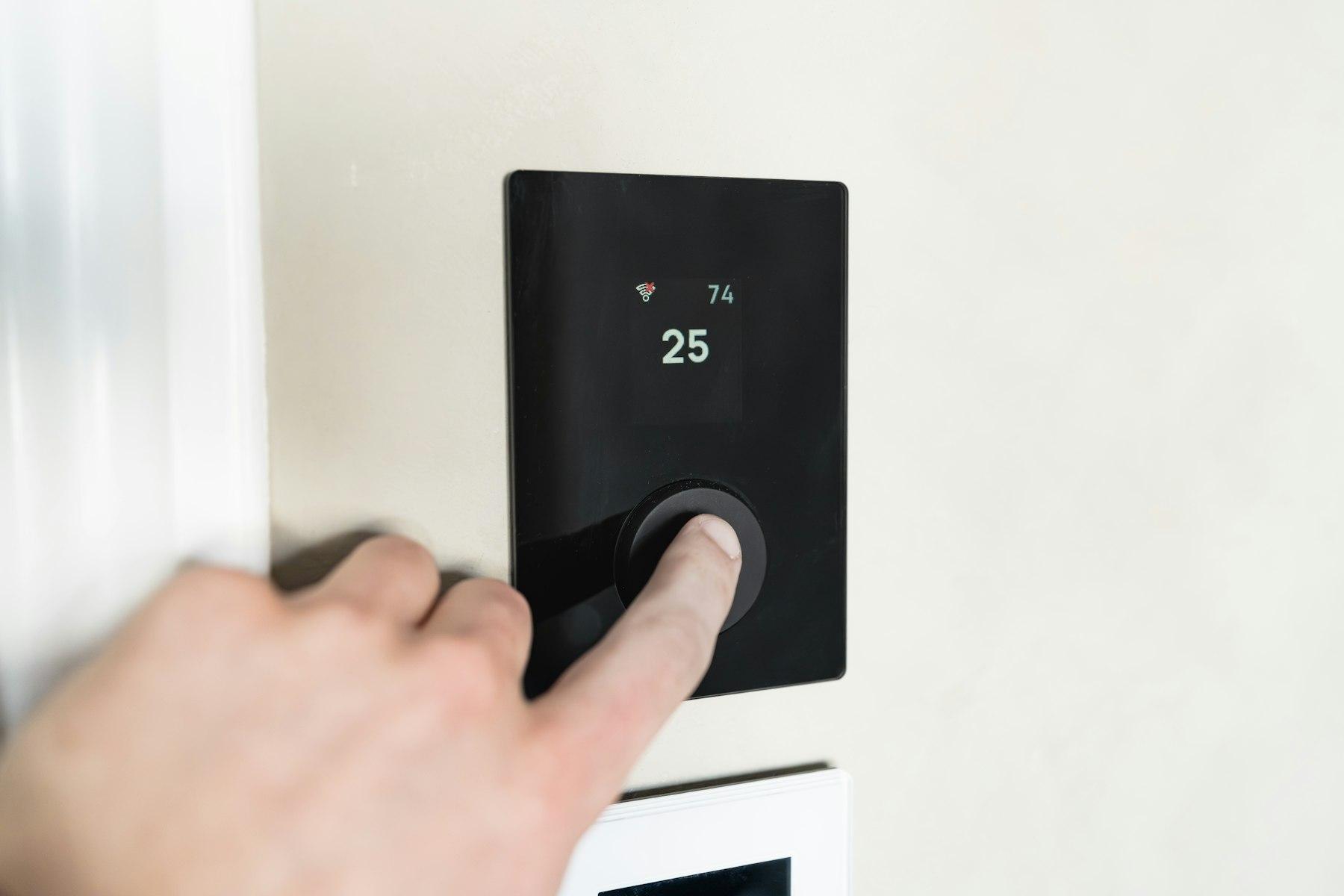
Set it to Heat, and set the temperature a few degrees above the current room temperature. It's the most common "broken furnace" fix there is. On a programmable thermostat, check that a schedule or vacation hold isn't overriding you.
2. Thermostat power
A blank or flickering screen means the thermostat isn't powered. Replace the batteries if it uses them. Hard-wired thermostats get power from the furnace itself, so a blank screen on one of those points back to the furnace's power (checks 3 to 5).
3. The furnace power switch
Even gas furnaces need electricity for the inducer, igniter, board and blower. Look for a switch like a light switch on or near the furnace, on a wall or ceiling joist close by. It's easy to flip by mistake when someone thinks it's a light. Make sure it's On.
4. The circuit breaker
Find the furnace breaker in your panel. If it's tripped (in the middle or off position), switch it fully off, then on. If it trips again, stop. That's an electrical fault for a technician.
5. The blower door
Many furnaces have a safety switch that cuts power when the lower door is off or not seated properly. After you change a filter, make sure the door is pushed fully into place.
6. The air filter
A clogged filter chokes airflow, the furnace overheats, the limit switch trips and the burners shut off. Repeated trips can lock the furnace out. Trane recommends replacing standard filters every 30 to 90 days. Slide in a fresh one with the airflow arrow pointing toward the furnace.
7. The gas supply
Find the shutoff valve on the gas pipe going into the furnace: the handle should be parallel to the pipe. Check that your stove or water heater works. If no gas appliance works, call your utility. If you smell gas, leave the house and call from outside.
Older furnaces with a standing pilot may simply need the pilot relit. Follow the instructions on the furnace label; the same checks we list for a water heater pilot that won't light (gas valve position, air in the line, a clogged pilot) apply here too. If the pilot won't stay lit, see water heater pilot light keeps going out: the thermocouple logic is the same.
8. Vent and intake pipes outside
High-efficiency furnaces vent through two plastic pipes out a side wall or the roof. Snow, ice, leaves or a bird's nest blocking them will stop the pressure switch from closing, and the furnace won't light. Clear the openings by hand; don't push anything into the pipes.
While you're there: high-efficiency furnaces also drain water. A clogged condensate line or a full condensate pump can shut the furnace down. Look for water around the furnace or a pump with a full reservoir.
9. The status light and lockout
If you've got this far, look at the status light on the furnace door or board and count the flashes. Our blinking red light guide explains how to read it.
Many furnaces lock out after repeated failed ignitions. On one common family of Carrier boards, for example, an ignition-proving failure (code 34) is retried three more times before the board goes into ignition lockout (code 14), which resets on its own after three hours. Trane describes a soft lockout on the first one or two failed sequences and a hard lockout on the third, which needs a technician to find and fix the cause.
To reset after checks 1 to 8: turn the furnace switch off for about a minute, then on. If your owner's manual gives a specific reset procedure, use that instead.
What the symptom tells you
| What you hear or see | Where it's failing | Next step |
|---|---|---|
| Nothing at all, no light on the board | No power | Checks 2 to 5 |
| Light on, but nothing starts | No call for heat, or a safety switch open | Thermostat, filter, door, code |
| Inducer hums, then stops; no ignition | Pressure switch not closing | Vent pipes, condensate, then call |
| Igniter glows or clicks, no flame | Gas not flowing | Gas valve and supply, then call |
| Burners light for a few seconds, then shut off | Flame not proven | Dirty flame sensor; see below |
| Burners run, blower never starts | Blower or its control | Call a technician |
The flame sensor
When the burners light for a few seconds and then go out, a dirty flame sensor is the classic cause. Lennox calls it the number one cause of furnace shutdowns. The sensor is a thin metal rod in the burner flame; it works on a tiny electrical current, so a thin coat of oxidation is enough to block the signal. Carrier's service manual tells technicians to clean oxide off it with fine steel wool. It's a quick job for a technician and a common DIY repair for confident homeowners, but it means shutting off power and gas and removing a part from the burner compartment. If you're not comfortable with that, call.
When to call a pro
Tell them what you checked and the exact code. It saves a diagnostic hour.
If the furnace runs but only blows cold air, go to furnace blowing cold air. All furnace topics: furnace troubleshooting.
Questions people ask
Why is my furnace not turning on even though the thermostat is set to heat?
The thermostat has to be set to Heat with the setpoint above the current room temperature. If it is, check for dead batteries, a blank screen, the furnace power switch, the breaker, and a missing or loose blower door. If all of those are fine, look at the status light on the furnace for a fault code.
How do I reset my furnace?
Turn off the power switch at the furnace (it looks like a light switch) or the breaker, wait about a minute, then turn it back on. Some owner's manuals describe a specific reset sequence; follow yours if it does. Write down any fault code before resetting.
What is a furnace lockout?
After repeated failed ignition attempts, the control board stops trying for a while to prevent unburned gas from building up. On some Carrier boards the ignition lockout lasts three hours before the furnace tries again on its own. Trane calls the third failed sequence a 'hard lockout' that needs a technician.
Can a dirty filter stop a furnace from turning on?
It can cause the furnace to overheat, trip its limit switch and shut down, and after repeated trips some boards lock out. Replace the filter if it's dirty; Trane suggests every 30 to 90 days for standard filters.
My furnace clicks but won't ignite. What does that mean?
The control is trying to start but a step is failing: the pressure switch isn't closing, the igniter isn't lighting the gas, or the flame isn't being sensed. Check the outside vent pipes and the gas valve, then read the blinking code. Igniter, flame sensor and gas valve work belongs to a technician unless you're experienced.
Sources
- Trane: Furnace not turning on
- Trane: Furnace hard lockout, causes and solutions
- Carrier 58-series troubleshooting guide with service/status code chart (PDF)
- Trane: Furnace light blinking (filter replacement every 30 to 90 days)
- Lennox: Furnace flame sensor
- Lennox: No power to thermostat
Written by the Why It Stopped editorial team from the manufacturer manuals and safety guidance listed above. It covers checks a homeowner can do safely; gas lines, refrigerant and sealed components are work for a licensed technician. See our editorial policy and safety disclaimer.